
Defining what Full-Service Event Production actually means
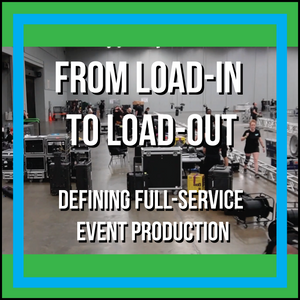
From Load-In to Load-Out
Richard Nava
If you've ever attended a flawlessly produced corporate event, a high-energy concert, or a polished awards gala and thought "how does all of this come together?"
You're not alone.
From the audience's perspective, great event production is invisible. Everything just works. The sound is clear, the lighting is dramatic, the stage looks incredible, and the show runs on time.
What the audience doesn't see is the weeks of planning, the hours of physical labor, and the team of skilled professionals working behind the scenes to make every second of that experience possible.
We talked with our co-founder and Director of Operations West, Collin Styles, to get an inside look on what full-service live event production actually looks like, from the first site survey to the final truck out the door.
Phase 1: Pre-Production — Where Great Events Are Really Built
The most important work in live event production happens long before a single cable is run or a truss is assembled. Pre-production is the planning phase that determines whether your event runs smoothly or scrambles to recover from preventable problems.
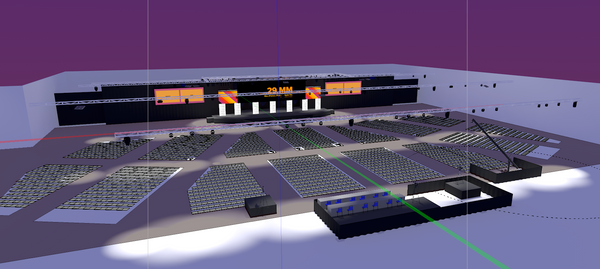
For TSV's production team, pre-production typically begins weeks, sometimes months, before show day. It starts with a thorough site survey of the venue, where our Technical Directors assess the space for critical factors like ceiling height, power availability, load-bearing capacity for rigging, acoustic characteristics, sightlines, and any structural considerations that will affect the production design.
From there, our team develops a full production design - mapping out LED wall placement, lighting rigs, audio system layout, camera positions, scenic elements, and signal flow. This design becomes the technical blueprint for the entire event, ensuring that every department is aligned before anyone sets foot on the show floor.
For events with performers, speakers, or broadcast components, technical riders are reviewed and accommodated during this phase. A technical rider outlines the specific requirements of an artist or presenter (input lists, monitor mixes, lighting preferences, video playback needs, etc) and reconciling those requirements with the venue and production design early prevents costly surprises on show day.
Pre-production is where experienced event production companies earn their value. The planning work that happens in this phase is what separates a smooth, professional event from one that's constantly firefighting.
Key pre-production deliverables include:
Venue site survey and production assessment
Full production design and technical drawings
Equipment lists and logistics planning
Technical rider review and accommodation
Crew scheduling and travel coordination
Vendor and venue communication
Collin, what's the biggest mistake you see event planners make when they underestimate the pre-production phase?
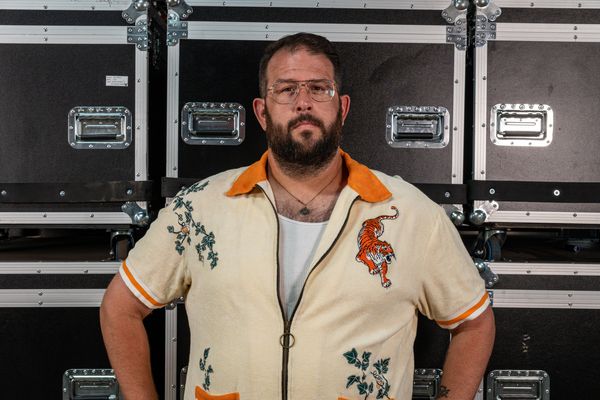
Collin Styles - Director of Operations West, Co-Founder
Collin: You have to strike a careful balance between constantly planning for the worst-case scenario, and being overly optimistic. Neither serve the event - if you’re engaged in worst-case thinking at all times, then you miss a lot of opportunities to push the envelope in terms of what’s possible in a production.
But if you always assume the best possible set of circumstances, then you can be derailed by a tiny bit of grit in the gears. You never know when the hotel’s freight elevator might break down, adding a couple of hours to the load in. If that’s going to kill your schedule, then you’ve made it all too tight. So I’ve worked with event planners who go to both.
What about the site survey? What's an example of a challenge your team uncovered during a site survey that fundamentally changed the production design?
Collin: The biggest ones are always around dimensions. "Can a 53’ truck really fit in the loading dock?" I know the venue says there are 20’ ceilings in the ballroom, but does that account for soffits, chandeliers, airwall tracks, etc.
There have been many times where we planned to put something in a ballroom, only to find that the venue’s published dimensions were out of date, or incorrect. Much better to find out about those things a few months ahead of the event, instead of the morning of load in!
Phase 2: Load-In - Building the Show
Load-in day is where the blueprint becomes reality. For larger productions, load-in can begin days before the event. For mid-sized events, it typically starts the morning of — sometimes well before sunrise.
The first priority is getting equipment off the trucks and into the venue in a logical, efficient sequence. Experienced stage crews follow a load-in order that minimizes congestion and allows each department to begin their work without blocking another. Staging and structural elements go in first, followed by rigging, then audio infrastructure, then lighting, then LED and video systems, and finally scenic and finishing elements.
Every system then goes through a meticulous installation process. Audio engineers run cable, patch consoles, fly or position speaker systems, and begin the process of testing every input and output in the signal chain. LED engineers assemble and hang video panels, connect data and power, and begin calibrating the wall for color accuracy and brightness. Lighting directors program fixtures, set positions, and begin building the cue stack that will run the show. Camera operators set positions, establish communication with the video engineer, and dial in exposure and framing.
How does TSV train new crew members to understand not just what to do, but why the order matters?
There are so many nesting decisions in putting an event together. Something as simple as which way you orient the ballroom can change which entry doors the audience is using, the availability or layout of rigging points, the order in which things need to be built….we’re charged with managing this cascading chart of dependencies, and it can be intimidating for people who are new to the game. Fortunately, most of it isn’t rocket science, it’s a series of pretty common-sense decisions. We can start with a checklist a mile long, but every event is different, and a lot of those checklist items won’t apply to every event. It just takes experience to know which things really matter, and to put them into play at the right time. I think we’ve done a nice job of letting our folks gain that experience with a solid safety net under them to ensure success.
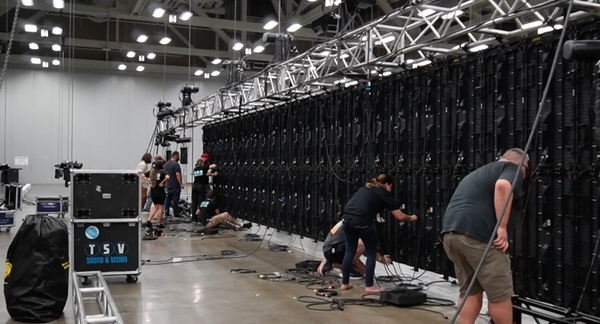
The TSV Crew building a flying LED wall
Once every system is installed and tested independently, the production team moves into systems integration — making sure audio, video, lighting, and communications are all talking to each other correctly.
Then comes soundcheck, often the most telling indicator of how well the pre-production phase was executed. A well-planned event with thorough pre-production reaches soundcheck faster, resolves issues more quickly, and gives presenters and performers the confidence they need going into the show.
By the time doors open, a professional production team has already run through every scenario they can anticipate and resolved every issue they can control. The show hasn't started yet — but the groundwork for a flawless event has already been laid.
Phase 3: The Live Event — Running the Show in Real Time
The show is live. Every seat is filled. And your production team shifts into a mode that requires equal parts technical precision and split-second decision making.
During the live event, each department is actively managing their systems in real time. The A1 (lead audio engineer) is riding the mix, adjusting levels, managing microphone transitions, and responding to the acoustic changes that come with a full room. The lighting director is executing cues, adapting to the energy of the room, and making real-time adjustments that keep the stage looking exactly as intended. The LED engineer is monitoring wall performance, managing content playback, and ensuring that every visual element hits on cue. Camera operators are following the action, framing critical moments, and feeding clean signals to the video engineer for display or broadcast.
Presiding over all of it is the Technical Director, the production team's quarterback. The TD is on headset with every department, calling the show, anticipating transitions, and solving problems before the audience ever notices them. When a presenter skips a slide, when a microphone cuts out, when a cue fires at the wrong moment — the TD and their team respond in seconds, often resolving issues before a single person in the audience realizes anything happened.
This is the value of an experienced live event production team. It's not just the equipment they bring — it's the calm, practiced expertise they apply when the stakes are highest and the margin for error is zero.
Phase 4: Load-Out — Ending the Show the Right Way
The final curtain falls, the last guest exits, and the production team's work enters its final phase: load-out.
Load-out is the reverse of load-in, executed with the same level of care and professionalism. Systems are powered down in the correct sequence, cables are pulled and coiled properly, equipment is inspected, packed, and loaded back onto trucks in a way that protects it for the next event. The venue is restored to its original condition, and the production team's wrap process ensures that nothing is left behind, nothing is damaged, and the client's relationship with the venue remains intact.
A professional load-out matters more than most clients realize. Venues have long memories, and the way a production company treats a space directly affects your ability to book it again. TSV's crews are trained to leave every venue better than they found it — because protecting our clients' relationships with their venues is part of what we do.
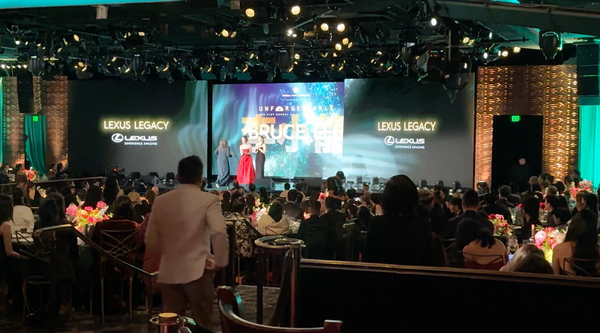
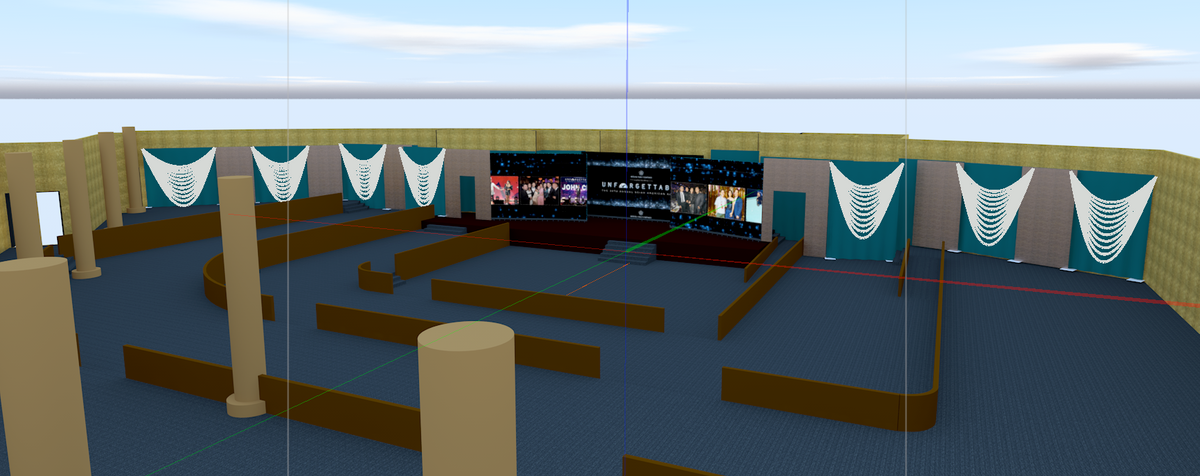
Stage of the Unforgettable Gala from the earlier render
Why Understanding the Production Timeline Makes You a Better Event Planner
One of the most common sources of friction between event planners and production companies is a misaligned understanding of what the production process actually requires — in time, in logistics, and in budget.
Looking ahead, Collin, what's one emerging challenge you see for full-service event production companies like TSV? How is your team preparing for it?
I’m sure there’s a good AI-focused answer here, but really I think that a lot of our company’s contribution to events is pretty hard to replace with AI. I see a lot of potential benefits for us coming there, so I guess the challenge is to leverage those tools on behalf of our clients. We’re doing our homework!
A more immediate challenge is probably the disruption downstream of AI - changes in the workforce resulting in a changing event landscape. As we’ve been working with lots of tech companies, we’re being asked to deliver very high-level events with big budgets, while also seeing some of our clients in other sectors needing to do more with less. I think we view both as part of our mission - we want to give our clients the best experience per dollar spent at all times. So pushing what’s possible on a smaller budget, and exceeding what a client expects from a larger one.
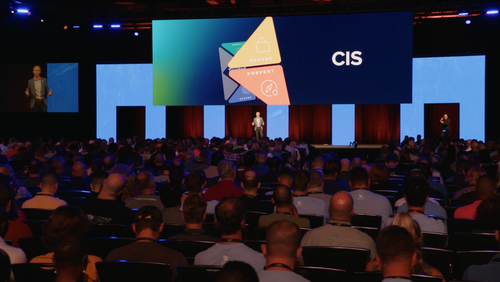
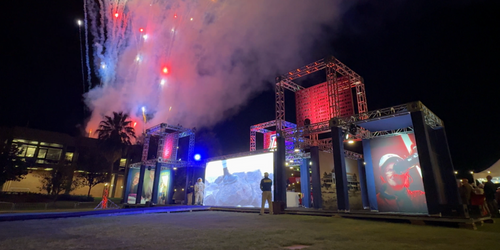
A large multi-layer LED structure in the Austin Convention Center from the earlier render
When event planners understand the full production timeline, everything gets easier. Budgets are built more accurately because the labor, logistics, and time requirements of each phase are accounted for from the start. Timelines are set more realistically because the planner understands how long load-in, soundcheck, and setup actually take. And partnerships between planners and production teams become more collaborative and less transactional — because both sides are working from the same shared understanding of what it takes to produce a great event.
At TSV, we believe that an informed client is our best client. The more our partners understand what full-service event production involves, the better we're able to work together to deliver events that exceed expectations at every level.
Ready to Talk Production?
Whether you're planning a national conference, a corporate gala, a brand activation, or a large-scale concert, TSV's full-service event production team is ready to walk you through every phase of the process — from the first site survey to the final truck out the door.
Let's build something exceptional together. Contact TSV today.