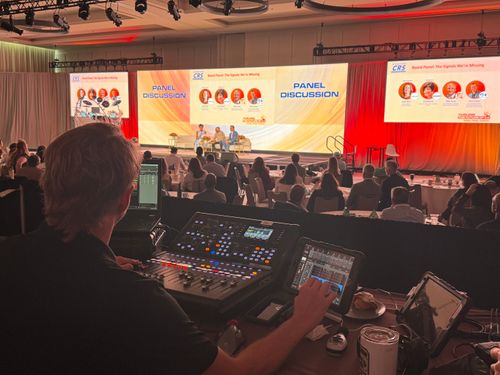
A buyer's guide for event planners and marketing directors managing multi-city productions
Choosing the Right Event Production Partner for Your National Event or Conference
Richard Nava
Managing a national tour or multi-city conference is one of the highest-stakes challenges in event production. You're coordinating timelines across multiple markets, maintaining brand consistency across different venues, and managing vendor relationships that span thousands of miles. One miscalculation—a missed production deadline, inconsistent stage design, or an equipment failure right before showtime—can undermine months of planning and damage your brand reputation.
The right production partner can transform this complexity into seamless execution. The wrong one will multiply your headaches. This guide walks you through how to distinguish between vendors and true partners, and what to look for when signing with a production company.
Vendor vs. Partner: A Critical Distinction
Not all production companies are created equal. Some function as vendors—they fulfill specific orders, execute tasks on a contract basis, and move on to the next job. Others operate as partners, taking ownership of your event's success and thinking strategically about your goals.
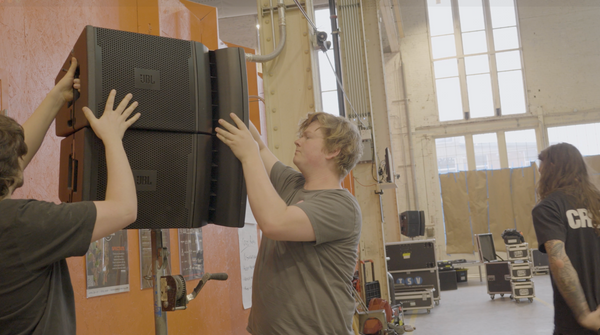
A vendor will:
Deliver what was ordered on time and on budget
Respond to requests and resolve immediate issues
Operate independently in each market you hire them for
A partner will:
Understand your tour or conference goals before execution begins
Manage every market with consistency, not as isolated projects
Anticipate problems and solve them before they impact your event
Invest in your success as if it were their own
When managing complex multi-city productions, you don't have time to coordinate dozens of independent vendors. You need someone thinking like an extension of your team, ensuring that every market delivers the same quality and brand experience.
Key Questions to Ask Before You Sign
Before committing to a production partner, dig deep with these questions:
1. Can you scale with us?
Ask whether the company can handle growth without losing quality. If you add cities or expand the scope of your event, will they have the infrastructure and resources to deliver the same level of service? Many production companies are built around a specific size. If your tour grows beyond their capacity, they'll outsource to local vendors—and suddenly you've lost the consistency you hired them for.
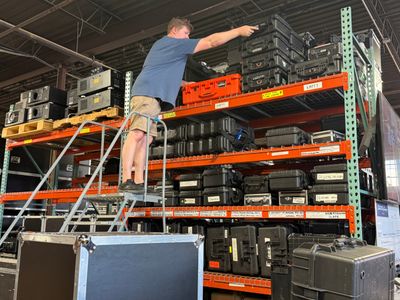
2. Do you own your equipment or rent it?
Equipment ownership matters more than most event planners realize. A production company that owns its fleet has the incentive to maintain it meticulously and can guarantee availability. A company that rents from third parties every time has more flexibility but less control. When equipment fails or rental markets get tight, you become vulnerable. Ask: What's their inventory? How do they maintain it? What happens if a key piece of equipment breaks mid-tour?
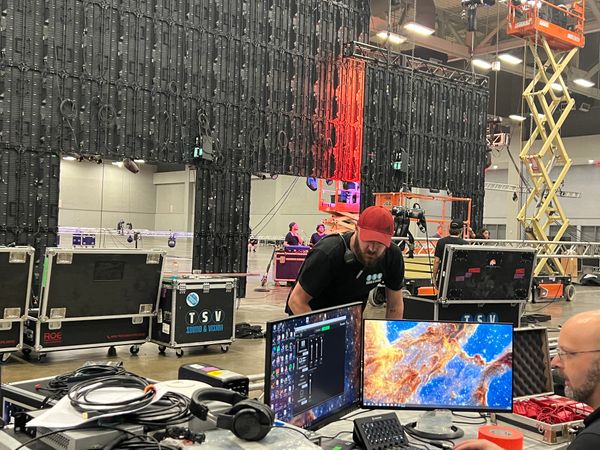
Mitch managing LED Wall setup
3. Do you provide on-site engineering support?
On-site engineering is where partnerships prove themselves. A general production director can manage logistics, but when your main display crashes two hours before showtime, you need an experienced engineer on-site who can diagnose the problem, implement a fix, and keep your event on track. Ask whether they staff each event with dedicated technical personnel, not just supervisors who happen to check in periodically.
These three questions separate partners from vendors. A true partner will have clear, confident answers to all three.
Why One National Partner Beats Multiple Local Vendors
The temptation to hire the "best local vendor" in each city is understandable. You want the company that knows the venue, has local relationships, and understands the regional market. But this approach introduces three major risks:
Consistency
When you work with different vendors in different cities, you're not really managing a tour—you're managing dozens of independent projects. The stage design in Kansas City might look different from Denver because two different companies interpreted the specs differently. Your audio engineer in Chicago has a different communication style than your audio engineer in Miami. These inconsistencies add up, and your attendees notice.
Communication
Coordinating across multiple vendors means managing multiple timelines, multiple points of contact, and multiple decision-making processes. When something needs to change—and something always needs to change—you're negotiating with each vendor separately. With one partner managing all cities, decisions are faster, changes are coordinated, and there's one clear line of responsibility.
Accountability
If something goes wrong, who's responsible? With local vendors, everyone points to someone else. The production company says it's the venue's fault, the AV vendor says it's the audio operator's issue, and you're stuck in the middle. With one national partner, accountability is clear. They own the outcome, and they have the authority to fix it across all markets.
One national production partner ensures that every attendee at every event experiences the same quality, the same brand presentation, and the same level of professionalism.
The Hidden Costs of Patchwork Production
Patchworking multiple local vendors seems cost-effective on a spreadsheet. You're hiring the "budget option" in each city. But this approach creates hidden costs that compound:
Coordination overhead
You or your team now owns the burden of managing 10, 15, or 20 different production companies. Email threads explode. Meetings multiply. Your internal resources are stretched thin just keeping everyone aligned—resources you could be investing in content, marketing, or attendee experience.
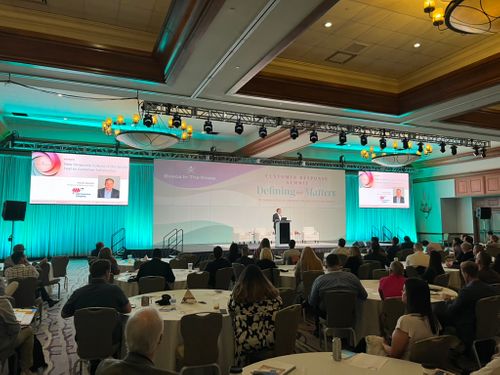
Quality inconsistency
One weak link breaks the chain. If one city's audio setup is subpar or the staging looks rushed, that market's event is diminished—and word travels. Attendees from that city share their experience on social media, and suddenly your conference or tour is perceived as uneven in quality.
Risk concentration
When you work with multiple vendors, you're depending on each one to execute flawlessly. A single vendor's failure to deliver doesn't just affect that one event—it affects your brand across all events. With one trusted partner, you're concentrating risk with someone who has the resources and infrastructure to handle problems on the fly.
The true cost of patchwork production isn't just money—it's credibility, attendee satisfaction, and your peace of mind. We spoke with Joel, TSV’s Director of East Operations, to speak more on the matter:
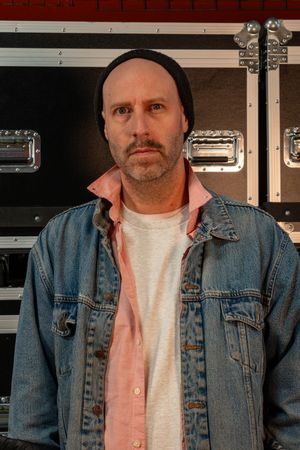
Joel Dodson - Co-Founder, Director of Operations East
Joel: A national partner is better because you don’t want tol be starting over every time you’re in a new city. The preproduction steps would have to be re-communicated to each new vendor, and that repetition is wasted time. If you have 4 events a year with 4 different vendors, that would be their first time working with not only your team, but your content (audio cues, projector or LED wall content, etc) as well.
This is super risky, and also disallows proper analysis for how to properly improve your production - you’re giving up true consistency and ability for growth. Not to mention the added stress on the client from needing to juggle and ensure everything is being communicated to each party - it’s unnecessary and just creates more work.
There is also almost always a lack in communication and coordination, especially when it comes to scheduling. Every vendor is going to have their proposed timeframes, and they tend to get overlapped which can interrupt set up or load out times, or just create headaches. If [another vendor’s] truck is blocking the dock and we need to load in to start setting up, that would cause friction that is completely avoidable.
By having a national partner, you’ll get to know your event team. Getting to know the team allows you to better understand and communicate with each other.
Then you’ll be able to compare and adjust your production. You can use jargon and industry terminology from the team, and even specific nuances that would be difficult to know without having a team be on repeat shows. Things like: “We know the main speaker likes to drink chocolate milk backstage, so we can have that ready when they show up.” That may seem like something small, but can make a huge difference in the event experience. That’s a real example by the way.
What do you look for when evaluating a potential client for a national or multi-city event?
Joel: I start with the venue and location and then what their expected attendance is going to be. Those key points alone help answer a whole lot of questions. For example, 200 people at a smaller chain property looks and feels a lot different than 200 people in a premier or large-scale property. Scope and scale is the foundation and reveals a lot about the event, so I look for that first. Then, the goal. The attendees are there for a specific reason, and the overall aesthetic and feel of the event (our job) helps accentuate that goal.
What to Look for in a Production Company's Track Record
When evaluating potential partners, focus on their track record. Specifically:
Case studies and client depth: Don't just ask for references. Ask for detailed case studies of multi-city productions they've managed. How large were the tours or conferences? Over how many cities? Were they all completed on time and on budget? More importantly, do they have long-term client relationships? Companies that have worked with the same clients for years have proven they can deliver value repeatedly—not just once.
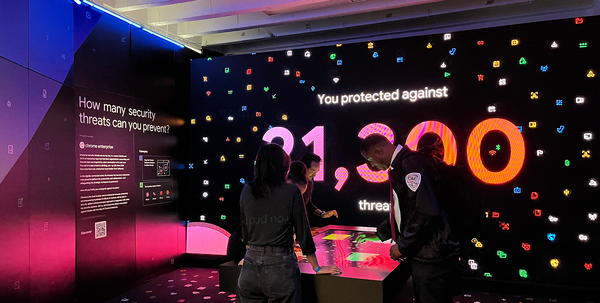
Problem-solving under pressure: Ask for stories. How have they handled equipment failures, venue changes, or unexpected weather? The best production partners have battle-tested solutions because they've faced real challenges and solved them. They should be able to tell you specific examples—not generic answers about how they "stay flexible." The ability to problem-solve in real time under pressure is what separates true partners from everyone else.
Client relationships: Ask if you can speak with their existing clients—preferably clients managing similar-scale productions to yours. How responsive are they? How do they handle conflicts? What do clients appreciate most about working with them? Clients who've worked with a company for multiple years and repeat engagements are the best testimonials.
When evaluating track records, look for depth, not breadth. A company that's done 100 one-off events isn't as proven as one that's managed 5 multi-year partnerships with major clients.
Make the Partnership Decision
Managing a national tour or multi-city conference is too complex and too important to leave to chance. You need a partner who understands the stakes, owns the outcome, and has the resources and experience to deliver consistency across every market.
As you evaluate production companies, use these criteria to distinguish true partners from vendors. Ask the hard questions about scalability, equipment ownership, and on-site support. Verify their track record through detailed case studies and client conversations. And remember: the cheapest option isn't always the best value. The production partner who delivers consistent quality, manages your entire national presence, and solves problems before they become crises? That's the partner who protects your brand and makes your job easier.
Your next tour or conference deserves a partner who's ready to deliver. Choose wisely.